The Market Shift Driving Reusable Packaging Demand
The plastics industry is entering Q3 2026 amid continued supply chain disruptions, resin price volatility, geopolitical uncertainty, and rising sustainability expectations.
For manufacturers, distributors, and logistics leaders, the focus is shifting away from short-term cost reduction and toward long-term operational resilience. As a result, demand for reusable packaging continues to accelerate across supply chains. Ongoing instability across global resin and feedstock markets is driving much of this shift.
Global polymer feedstock markets remain volatile due to energy instability, shipping constraints, and regional supply imbalances. These pressures continue to create uncertainty in resin pricing, procurement planning, and material availability.
Recycled polyethylene markets highlight this volatility. Food-grade rHDPE prices have risen nearly 50% year-to-date. HDPE natural bale prices have also increased more than 80% since the start of the year. Tight post-consumer supply and strong demand from PCR producers are behind both increases (ICIS).
Plastic production is closely tied to oil and natural gas feedstocks. When energy markets shift, resin costs follow. That instability is pushing businesses toward reusable packaging materials and sustainable packaging solutions that reduce virgin resin dependency and support long-term supply chain stability.
Recycled Resin Is Getting More Competitive
As virgin resin pricing rises, recycled materials are becoming increasingly competitive. The recycled plastics market is projected to reach $127 billion by 2034. This signals a long-term structural shift in sourcing and packaging strategy.
As price gaps narrow, procurement teams are reevaluating material choices and investing in sustainable packaging solutions that incorporate recycled content while reducing exposure to raw material volatility.
This shift reflects a broader industry movement toward reusable packaging systems, circular material strategies, and long-term sustainability commitments.
The Limits of Recycling Infrastructure
While demand for recycled material continues to grow, recycling infrastructure is struggling to scale at the same pace.
Transportation inefficiencies, contamination, and inconsistent feedstock quality continue to limit recycling performance. Increasingly, industry leaders recognize that recycling challenges are not only tied to processing capacity but also to logistics and material recovery systems.
As a result, companies are accelerating the adoption of reusable packaging and closed-loop packaging systems designed to reduce waste before materials enter the recycling stream. Durable reusable packaging materials help improve operational efficiency, reduce material consumption, and strengthen circular supply chain strategies.
From Sustainability Initiative to Operational Strategy
Across manufacturing, automotive, agriculture, food processing, and industrial logistics, companies are reevaluating packaging through a lifecycle and resilience lens.
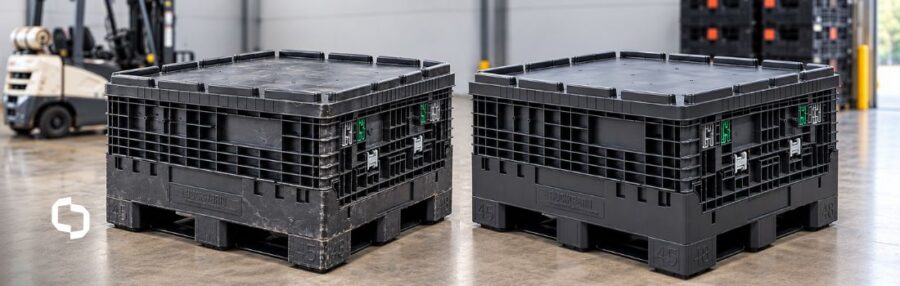
Reusable packaging systems, including reusable pallets, bulk containers, totes, and transport packaging, are no longer viewed solely as sustainability initiatives. They are becoming strategic operational assets that improve durability, reduce material dependency, and stabilize supply chain performance during periods of market volatility.
As organizations prioritize efficiency and predictability, reusable packaging materials are becoming a foundational component of modern sustainable packaging strategies.
Unlike single-use packaging, reusable bulk containers and pallets maintain consistent structural integrity over hundreds of use cycles, reducing damage rates, lowering replacement costs, and providing operations with a predictable, reliable foundation.
At Extera, we continue to see a significant market shift as companies move from cost-driven packaging decisions toward resilience-focused systems built around reusable and sustainable packaging solutions.
In Q3 2026, competitive advantage will belong to organizations that prioritize circularity, operational durability, and supply chain resilience over short-term resin pricing.
As market volatility continues, the case for reusable systems has never been stronger. Connect with Extera to build a more resilient, cost-efficient supply chain.