Are Disposable Containers Really the Lower-Cost Option?
Choosing between plastic containers and disposable containers involves more than comparing upfront purchase prices. While disposable packaging often appears less expensive initially, the total cost over dozens or even hundreds of shipping cycles tells a very different story.
For manufacturers, distributors, and logistics providers, packaging is an operational asset rather than a one-time purchase. Reusable plastic containers deliver value across multiple shipping cycles, while single-use containers require businesses to purchase new packaging for every shipment. Evaluating packaging through a cost-per-use model provides a more accurate picture of long-term operating costs and return on investment (ROI).
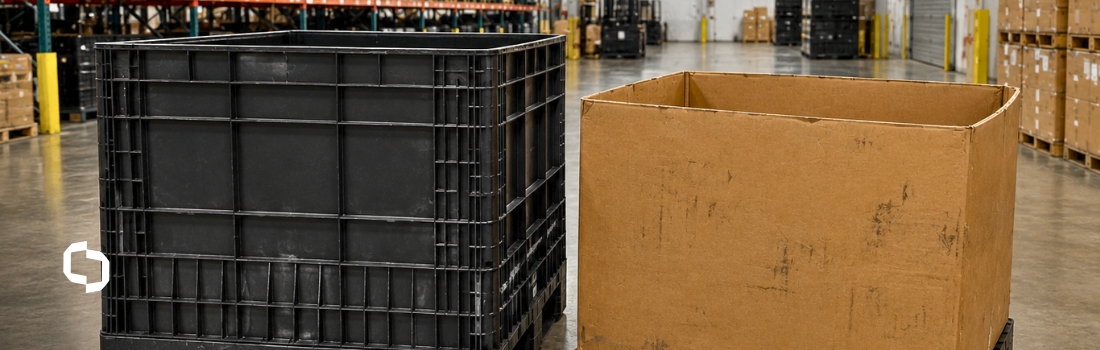
Disposable containers, including cardboard boxes, Gaylord boxes, corrugated containers, and other single-use packaging, often seem like the economical choice because of their lower initial price. However, that cost is incurred every time products leave the facility, since the packaging is intended for single use.
Understanding the Long-Term ROI
The most meaningful way to compare plastic containers and disposable containers is to evaluate cost per use rather than purchase price alone.
A customer recently shared a telling example with our team. They were spending $48 per pallet just to cover the wooden pallet, Gaylord, and liner bag. Even worse, that figure did not even account for the labor cost to assemble everything! That is a substantial cost before a single product ever leaves the facility.
The math on reusable containers looks very different. A reusable plastic container spreads its cost across dozens or even hundreds of shipping cycles, meaning the longer it stays in service, the less it costs per use. Meanwhile, single-use containers require a new purchase every single time.
Beyond lower cost per use, reusable plastic containers can also help businesses:
- Reduce recurring packaging purchases
- Lower replacement material costs
- Improve warehouse organization
- Increase handling and storage efficiency
- Better protect products during transportation
- Reduce packaging waste
- Improve overall supply chain efficiency
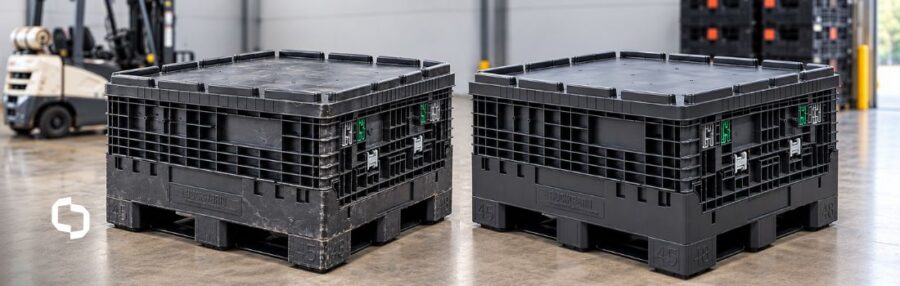
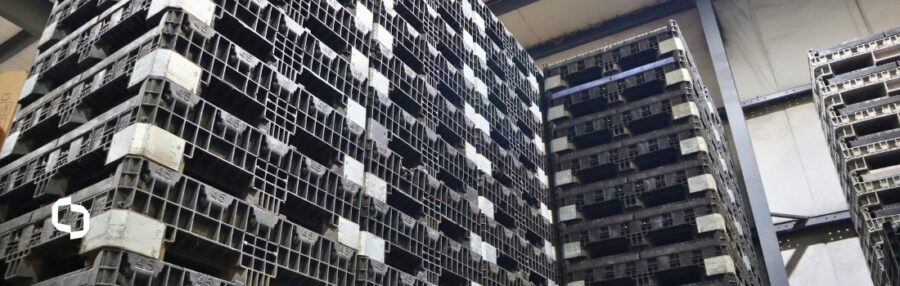
Unlike disposable containers that are purchased, used once, and discarded, industrial reusable containers are engineered to withstand repeated use in manufacturing, warehousing, distribution, and closed-loop supply chains. In many applications, durable reusable containers remain in service for hundreds of shipping cycles, continuing to reduce packaging costs long after the initial investment has been recovered.
Why Are Rising Resin Prices Making Disposable Containers More Expensive?
Material costs have become increasingly unpredictable, particularly for products manufactured with virgin resin. Because many single-use containers rely on newly manufactured raw materials, fluctuations in resin pricing can quickly increase packaging costs. Companies purchasing new packaging for every shipment experience those increases almost immediately.
Reusable plastic containers offer a layer of insulation from that volatility. Once a container is in service, its cost is fixed. Resin prices can move — and right now they are — but that movement does not affect what you already own and are actively using.
Is Leasing Plastic Containers the Smartest Way to Get Started?
Even when businesses recognize the long-term value of reusable containers, upfront capital costs can delay adoption. Leasing provides a flexible way to experience the benefits of reusable packaging without making a significant initial investment.
A reusable plastic container leasing program allows businesses to:
- Test reusable packaging within existing operations
- Reduce upfront capital expenditures
- Scale container quantities as production demands change
- Measure cost savings before purchasing a container fleet
For businesses comparing reusable plastic containers and disposable containers, leasing offers a practical, lower-risk entry point. Companies can validate performance, calculate real-world savings, and determine the best long-term reusable packaging strategy for their operations before making a larger capital commitment.
When evaluating plastic containers vs disposable containers, the lowest purchase price rarely represents the lowest total cost. Repeated replacement purchases, rising material costs, and operational inefficiencies can quickly make disposable packaging more expensive.
Reusable containers provide a long-term solution that reduces packaging costs, improves supply chain efficiency, and delivers measurable ROI through repeated use. They also help create more predictable operating expenses. Extera helps manufacturers, distributors, and logistics professionals implement durable, reusable packaging solutions designed for long-term performance.
Whether you’re ready to invest in a reusable container fleet or want to begin with a flexible leasing program, Extera can help identify the right solution for your operation. Contact our team today to learn how reusable containers can reduce packaging costs, improve operational efficiency, and deliver long-term value for your business.