Are Gaylords Really Saving Your Operation Money?
Gaylord boxes show up in warehouses everywhere. They are familiar, easy to grab, and feel inexpensive enough to justify using them over and over again. For many teams, they have simply become the default choice.
But as operations scale and expectations rise, the cracks in that habit start to show. Manufacturers never designed cardboard Gaylords for durability, safe stacking, heavy loads, or long-term use. They break down quickly, create safety risks, generate waste, and quietly drive up operational costs.
Understanding what Gaylords really are, why they are so commonly used, and why they fall short over time can help teams shift toward packaging that performs better, lasts longer, and supports a more efficient supply chain. Reusable plastic containers offer a stronger, more sustainable alternative, especially when durability and reliability matter most.
What Is a Gaylord Box and Why Are They So Common?
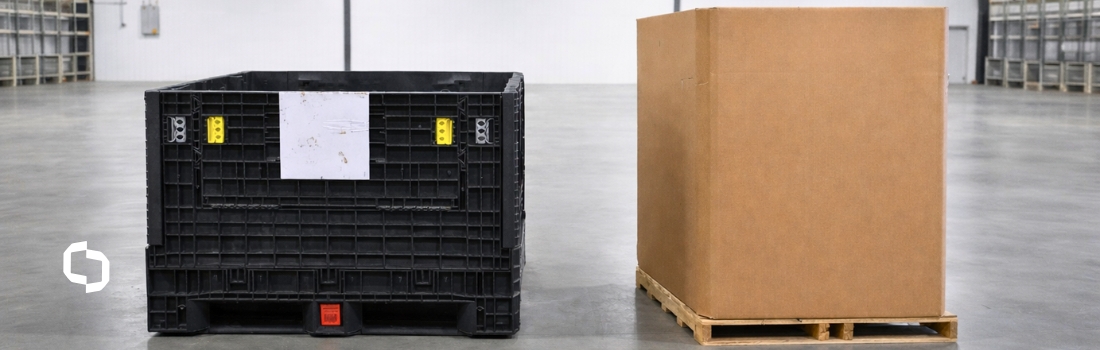
A Gaylord box is a large corrugated cardboard container, typically mounted on a pallet, used to hold bulk materials. The name comes from the Gaylord Container Company, a Chicago-based packaging manufacturer that popularized this box style in the mid-20th century. Over time, the brand name became shorthand for any oversized cardboard bin, no matter who produced it.
You will see these boxes everywhere, from manufacturing floors and recycling centers to food processing and distribution warehouses. They are often used for parts storage, scrap collection, and one-way shipping.
Gaylord boxes became common because they are easy to obtain, require little upfront investment, and are flexible for short-term needs. When operations are small or volumes are unpredictable, they seem like a simple solution. The problem is that cardboard bulk boxes were never built for repeated use, heavy loads, or long-term handling. Over time, their limitations have become harder to ignore.
The Case for Reusable Plastic Containers
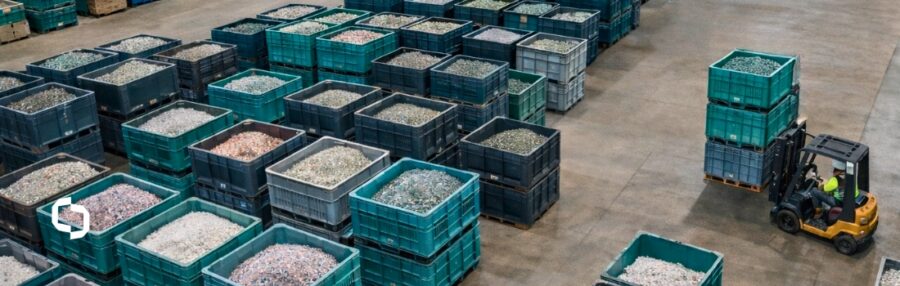
Plastic bulk containers are built for repeat cycles, heavy use, and predictable performance. Unlike cardboard, they maintain their shape, strength, and integrity even in demanding environments. Standardized sizes enable safe stacking and improved space optimization across warehouses and transportation lanes.
In real-world operations, the difference becomes clear quickly. Facilities handling heavy or sharp materials see fewer failures. Teams managing seasonal surges can stack with confidence instead of worrying about collapse. Companies paying for cardboard disposal realize they can eliminate an entire waste stream by switching to reusables.
Reusable plastic containers also offer something Gaylords never can: repairability. When damage occurs, containers can be repaired and returned to service instead of thrown away. And when they eventually reach the end of their usable life, recyclers can process most of them into new material, supporting a truly circular system.
Cardboard Gaylords vs. Reusable Containers: A Clear Comparison
Cost Per Use
Cardboard bulk boxes may cost less upfront, but they are often single-use or limited-use items. Reusable containers spread their cost across years of service, dramatically lowering the cost per use.
Durability & Safety
Corrugated boxes are vulnerable to moisture, impact, and collapse, especially under heavy loads. Plastic reusables are engineered for structural strength, reducing the risk of damage and injury.
Stackability & Space Optimization
Because cardboard weakens over time, it becomes unreliable for stacking and long-term storage. Plastic containers offer consistent, safe stacking, improving warehouse efficiency.
Reusability & Repair
Once a cardboard bin is damaged, it cannot be repaired and must be thrown away. Plastic containers can be repaired, reinforced, and returned to service for many more cycles.
Environmental Impact
Disposable packaging creates a steady waste stream and ongoing disposal costs. Reusable containers reduce landfill volume and can be reprocessed into new products when they are no longer viable.
Long-term ROI
While cardboard solutions seem inexpensive initially, frequent replacements and hidden waste expenses add up quickly. Reusable containers deliver a stronger long-term return through durability, repairability, and consistent performance.
How Extera Helps Teams Move Beyond Gaylords
Gaylord boxes serve a purpose, but that is not long-term efficiency. As operations grow and expectations rise, reusable plastic containers offer a safer, more reliable, and more sustainable alternative.
The right packaging choice reduces risk, improves performance, and delivers real financial return over time. If your operation is rethinking how materials move through your facility, our team is here to help you take the next step with confidence.