Where’s Your Container? Put BLE Tracking and Barcodes to Work
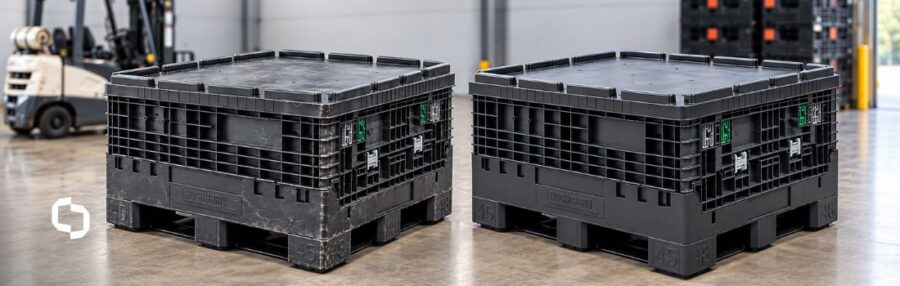
A reusable container may move through warehouses, loading docks, outdoor storage, and wash cycles before its next load. Its tracking tag needs to stay attached and functional throughout that journey. Reliable identification starts with choosing technology that fits how your containers move and where your team needs visibility.
Extera’s sister company, Scoutwise, brings hands-on experience in logistics, asset management, and reusable packaging to that decision. Its platform supports BLE tracking, barcode scanning, and RFID, giving businesses flexibility to match the technology to their operations.
What is Bluetooth Low Energy (BLE Tracking)?
Bluetooth Low Energy, or BLE tracking, uses asset tracking tags that transmit signals to compatible gateways or receivers. Within a configured coverage area, these signals help teams monitor container presence or proximity without an employee scanning each container individually. Location detail and update frequency depend on system design, receiver coverage, and operating conditions.
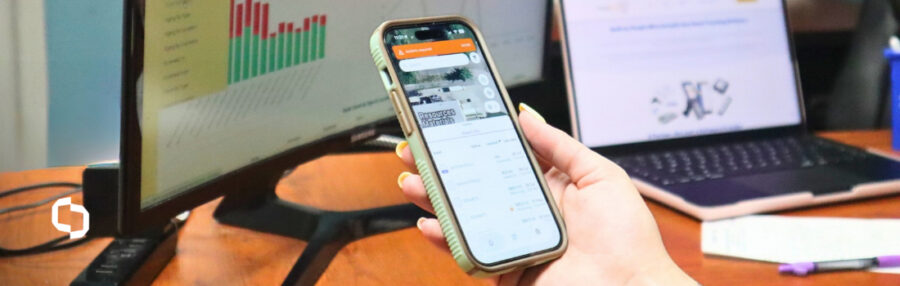
For teams managing containers across a facility, BLE tracking can help answer a practical question: where was this container last detected? Scoutwise supports indoor asset visibility and proximity awareness, helping teams locate containers between recorded transactions.
Barcode Labels Capture Individual Transactions
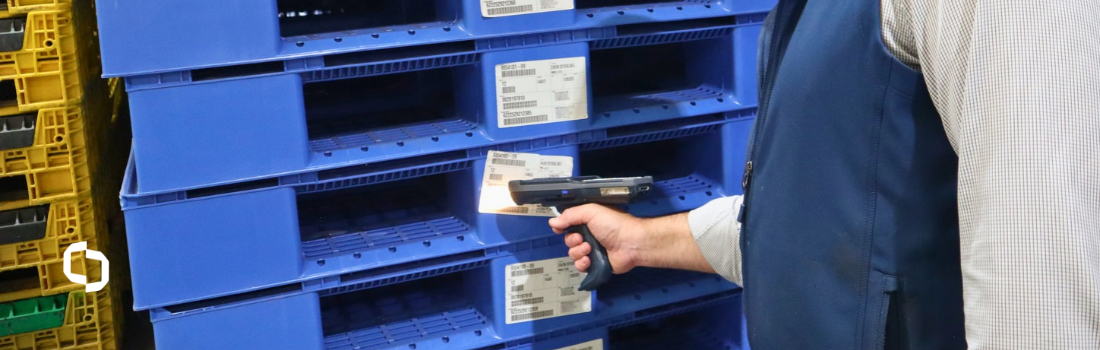
Barcode scanning complements Bluetooth Low Energy tracking by recording deliberate actions, such as checking a container out or confirming its return. Employees read these printed labels with compatible scanners, making accessible placement and clear, durable print essential.
Each method has different durability requirements. BLE asset tags need secure mounting, protection for their electronics, and a plan for battery maintenance where applicable. Barcode labels need strong adhesion and readable print. Matching asset tracking tags to these requirements helps maintain a dependable connection between each container and its digital record.
A Strong Read Starts With a Tag That Stays Put
A tag that reads correctly on day one still needs to stay attached through repeated use. Adhesive selection starts with the container material. For reusable plastic containers, ask whether the adhesive is suitable for the specific resin, surface texture, and expected conditions. A label that bonds well to smooth metal may perform differently on a textured plastic wall.
Installation matters, as well. Follow the tag manufacturer’s instructions for surface cleaning, drying, application temperature, pressure, and bond-development time. Avoid applying labels over dirt, oil, loose material, or an existing label that could peel away.
If adhesive attachment isn’t suitable, ask about a protected tag holder or another manufacturer-approved mounting method. The goal is an attachment that remains secure through repeated handling, cleaning, and return cycles.
Built for the Journey: Choosing Tags That Withstand Real Conditions
A tag that stays attached must also withstand its working environment. The word “durable” means little without knowing which conditions the tag can tolerate. Outdoor storage, repeated washing, and chemical exposure each create different requirements.
Before selecting asset tracking tags, map the container’s complete route:
- Weather and temperature: Sunlight, rain, freezing conditions, and hot storage areas.
- Water and washing: Splashing, immersion, detergents, wash temperature and pressure.
- Chemical contact: Specific cleaners, oils, solvents, or process chemicals, including their concentrations and contact times.
- Physical wear: Scraping, impacts, repeated handling and contact during stacking or nesting.
Manufacturer testing can distinguish between these failure points. Request documentation for the exact tag and printing combination under consideration. Water resistance alone does not establish chemical or pressure-wash resistance. Compare the documented test conditions with your actual cleaning and handling processes to determine whether a tag is suitable for the job.
Location Matters: Where You Place a Tag Can Change Its Performance
Even a durable, securely attached tag can underperform in the wrong location. Placement needs to balance protection, barcode scanning access, and BLE tracking performance. Choose a consistent location on each container type that avoids forklift contact, hinges, folding joints and surfaces that rub together during stacking.
A recessed panel may offer protection, provided it does not interfere with scanning or signal detection. For barcode labels, keep the full barcode and the clear space at either end visible and unobstructed. Employees should be able to scan without unnecessarily moving or unstacking containers.
For BLE asset tags, consider how placement affects signal detection by nearby gateways or receivers. Metal surfaces, container contents, and tightly stacked arrangements can influence wireless performance. A protected mounting location should also allow access for battery maintenance where applicable. Test barcode scanning and BLE tracking with containers empty, loaded, stacked, and folded where applicable. A location that works on an empty container in an open aisle may perform differently in a loaded stack. Attach labels and tags to the container body whenever practical so the identifier stays with the intended asset rather than an interchangeable lid.
Test Before You Scale: Turn Reliable Reads Into Reliable Records
Selecting asset tracking tags should include a small operational pilot before a wider rollout. Use representative containers, actual readers, and normal handling routes. Include the employees who will perform scans or respond to missed reads. Run tags through the cleaning, storage, and return conditions they will encounter.
Measure successful reads against a known container count. Record missed reads, reads from containers outside the intended checkpoint, peeling labels, and damaged print. Those results can help identify whether adjustments are needed in tag choice, placement, reader setup, or employee procedures.
Verify the data connection as well. Each identifier should point to the correct container record. Establish a replacement process that preserves the container’s history and retires the old identifier appropriately. Include tag condition checks in routine container inspections.
Scoutwise’s team uses its platform to manage thousands of company-owned assets. That experience reinforces the value of evaluating tracking decisions under everyday operating conditions, where tag performance and practical workflows must work together.
Reliable asset tracking depends on several choices working together: the right identification method, a suitable attachment, documented exposure resistance, tested placement, and accurate asset records. Careful selection reduces preventable gaps in container histories and gives teams a clearer basis for inventory and return decisions.
Whether you are planning a new system or troubleshooting missed reads, start by following one container through its full working cycle. Talk with Extera about what it encounters along the way and explore with our Scoutwise team how tag selection and placement can support more dependable tracking.