Why Material Handling Decisions Can't be an Afterthought
When companies are planning a new facility, material handling decisions quietly shape how everything else performs. Long before the first shipment moves, choices about containers, pallets, layout, and flow begin to influence efficiency, safety, and scalability.
Getting these decisions right early helps facilities avoid rework, congestion, and operational bottlenecks once production ramps up. This is why many teams rely on warehouse consulting services to build a stronger foundation for long-term performance. With the right planning, space, labor, and equipment can work together rather than against each other.
Planning for Warehouse Workflow
When planning material handling for a new facility, the first priority should be to understand how materials will flow through the operation. Before selecting containers, pallets, or equipment, there needs to be clarity on throughput goals, labor models, and space constraints. Defining these fundamentals early helps prevent layout limitations and inefficiencies that are difficult to correct later.
For many facilities, this kind of upfront clarity is easiest to achieve with experienced guidance. Extera’s warehouse consulting services begin with practical, discovery-driven discussions focused on the real conditions of the operation. The team asks detailed questions around product type and weight, handling frequency, inbound and outbound flow, dwell time, and whether processes are manual or automated. Forklift types, aisle plans, rack concepts, and lifecycle expectations are also evaluated early. This ensures systems are designed with reuse, safety, and long-term performance in mind.
The Cost Implications of Bulk Container and Pallet Selection
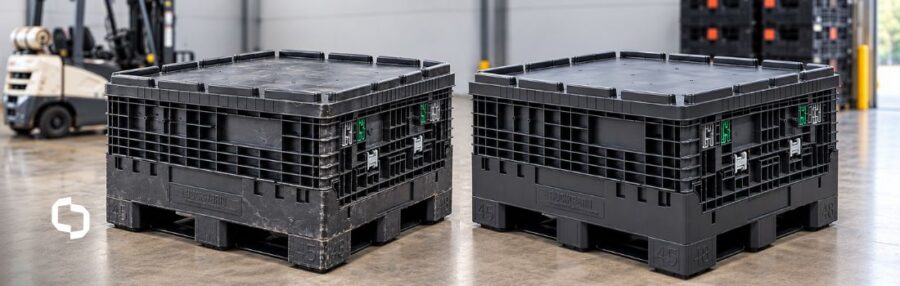
One of the most common challenges in new facilities comes from rushed container or pallet decisions. Selecting a bulk container based only on footprint, without considering stack height or weight distribution, can limit vertical space and reduce usable capacity. Ignoring fork entry direction or clearance requirements can lead to congestion and safety issues.
Container and pallet choices also affect how often assets are moved, nested, or stored empty. When these factors are underestimated, handling frequency increases, and wear accelerates. Misalignment of rack beams, conveyors, or automation can require costly adjustments once operations are live.
Even small dimensional differences matter. A container that is only slightly larger than planned can change aisle width requirements, reduce rack density, and create blind spots for forklift operators. These impacts compound across an entire facility.
How Warehouse Layout Influences Safety and Efficiency
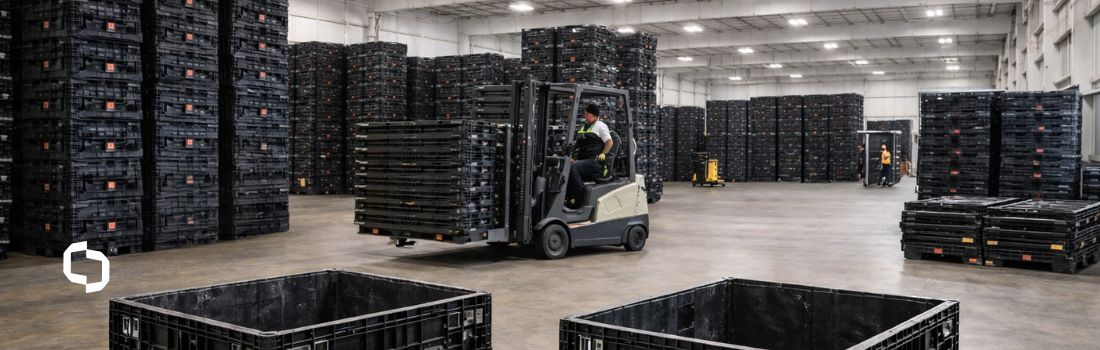
Material handling layout is closely tied to safety. Poor planning often results in unstable stacking, overloaded containers, and congested aisles. Forklift visibility suffers when loads are not well matched to container design, increasing collision risk and operator fatigue.
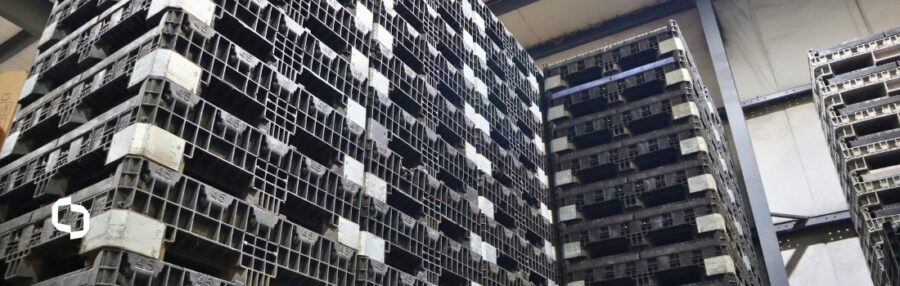
Beyond aisle width and rack placement, effective layout planning also focuses on maximizing usable space throughout the facility. This includes evaluating vertical storage, staging areas, and, when appropriate, outdoor space around the building to relieve pressure indoors. With the right container selection and an understanding of how materials move and where they can safely be stored, facilities can increase capacity and improve flow without expanding their footprint.
Extera’s supply chain consulting team works closely with operations, safety, and engineering teams, and often with architects or system integrators. By reviewing layouts and challenging assumptions early, they help pressure-test decisions and identify safer, more efficient alternatives. This hands-on collaboration reduces the need for improvised solutions once a facility is operational.
Is Your Facility Ready for What Comes Next?
A common mistake in facility planning is designing systems around current volume rather than future growth. Material handling systems that work at launch can become bottlenecks as throughput increases. Extera encourages teams to plan for where operations will be in two years, not just the first few months.
This is where leasing programs become especially valuable. Leasing allows facilities to scale container fleets as volumes change, test different configurations, and avoid locking capital into assets that may not fit future needs. It provides flexibility during ramp-up periods and supports operations that are still refining their processes.
Repair and reuse also play a role in long-term planning. Designing systems with repairability in mind reduces replacement costs and extends asset lifecycles, supporting both cost control and sustainability goals.
What Makes Extera Different From Traditional Suppliers
What separates consulting from traditional equipment sales is the depth of questioning. Extera asks questions that many vendors do not, such as how often a container will be touched per shift, what happens to it when it is empty, and what tends to break first in existing systems. These questions reveal operational realities that pricing-focused approaches often miss.
By starting with the problem rather than the product, Extera helps customers avoid decisions that appear efficient on paper but fail in practice. The result is a material handling strategy grounded in real-world performance, safety, and total cost of ownership.
For operations that need greater visibility, Extera can also incorporate asset tracking into the strategy. Tracking container movement across the warehouse and beyond helps teams identify inefficiencies, reduce loss, and make more informed decisions as operations scale, without adding unnecessary complexity.
Planning material handling for a new facility is not just a logistics challenge. It is a strategic decision that influences efficiency, safety, and scalability for years to come. Early consultation with experts helps teams design systems that adapt as volumes grow and workflows evolve.
Through hands-on warehouse consulting services, flexible leasing options, and repair-and-reuse programs, Extera supports facilities from planning through operations. By addressing material handling early, new facilities can avoid costly missteps and build systems designed to perform from day one.