
Why Sustainable Practices in Business Cannot Wait
Sustainable practices are no longer “nice-to-have” in business—they’re necessary. Like in everyday life, where small steps like recycling or reducing energy use can add to meaningful change, companies must take action to reduce their environmental impact. With growing state regulations, rising operational costs, and increasing consumer demand for eco-conscious companies, the urgency to achieve sustainability in business has never been greater.
The path to sustainability might seem overwhelming, but it doesn’t require a complete overhaul of your operations. Small, intentional changes can make a lasting impact—saving money, improving efficiency, and positioning your business as a leader in a rapidly changing world. Every step counts, and with the right strategy, sustainable practices can benefit both the environment and your bottom line.
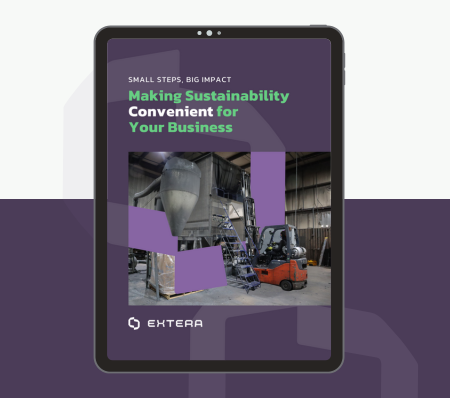
Our guide breaks down practical ways to integrate sustainability into your business. From setting achievable goals to reducing waste, it’s all about making sustainability convenient.
- Cost Savings
- Operational Efficiency
- Improved Brand Reputation
- Regulatory Compliance
Adopting sustainable practices doesn’t have to be complicated. Start small, measure your progress, and watch as those small changes lead to big wins for your business, customers, and the environment.
Ready to get started? Download our guide and see how Extera can help make sustainability simple for your operations.